
The beginning of the desktop publishing revolution was an exciting time for me. I had just graduated from the University of Michigan with a B.A. in English. My first job out of college in Ann Arbor, Michigan, was at a small second-floor typesetting shop in Nickel’s Arcade, an old building in the business district just off campus.
I found it thrilling to be able to set type using different fonts, sizes, and formats, leading to decades of work as a full-time freelance book designer and formatter for print books and e-books.
There have been many innovations and changes in the way book design and formatting are done, but none have excited me as much as the developments in AI image generation and animation.
I started out using AI about three years ago to generate images for book covers of classic books like “Anna Karenina” and “Dracula” that I placed on my reiderbooks.com website and posted to Instagram and what was then known as Twitter.
I started out using the Microsoft Bing Image Generator but then switched to using Midjourney on the advice of some colleagues.
Despite the proliferation of AI images being used in books and elsewhere, or because of this, Amazon/Kindle Direct Publishing requires that you indicate whether AI was used a lot or a little in images, text, or translations.
From what I understand, this also applies to elements used on the book cover or interior. So if the author didn’t use any AI in the writing of the book, they would still be required to click the uses AI box at KDP and other sites.
Despite this currently insurmountable hurdle, I decided to build a library of design elements that I could use for book design elements in the future, and to try out the capabilities of Midjourney.
I was happily thrilled and amazed by the creative and often beautiful designs that were generated. After working just in black, white, and gray for some time, I decided to add gold-colored elements.
Soon after that I was working in full color and haven’t really done anything in black and white for a while.
Aside from posting on my website and social media, I’ve only been able to use one of my AI background images for an actual printed book. The author wasn’t deterred by the AI issue and went with one of my AI-generated abstract images for the part openers pages.
I experimented with hundreds of versions of images like the one below, using 4 copies of an AI image in a template I set up in InDesign.

I don’t remember exactly how it got started, but after at least a year of generating mostly abstract images that I intended to use for book design purposes, Midjourney added an “animate” feature, which made 5 second animations of any of the images it generated. It came at a cost, and I burned through at least $300.00 in excess feeds beyond the hours allowed with my upgraded Midjourney account plan (the charge by the hours used).
I started with animating images of a windmills (one of which got lots of likes on LinkedIn) or anything I could think of that moved. I naturally thought of animals and set up making some.
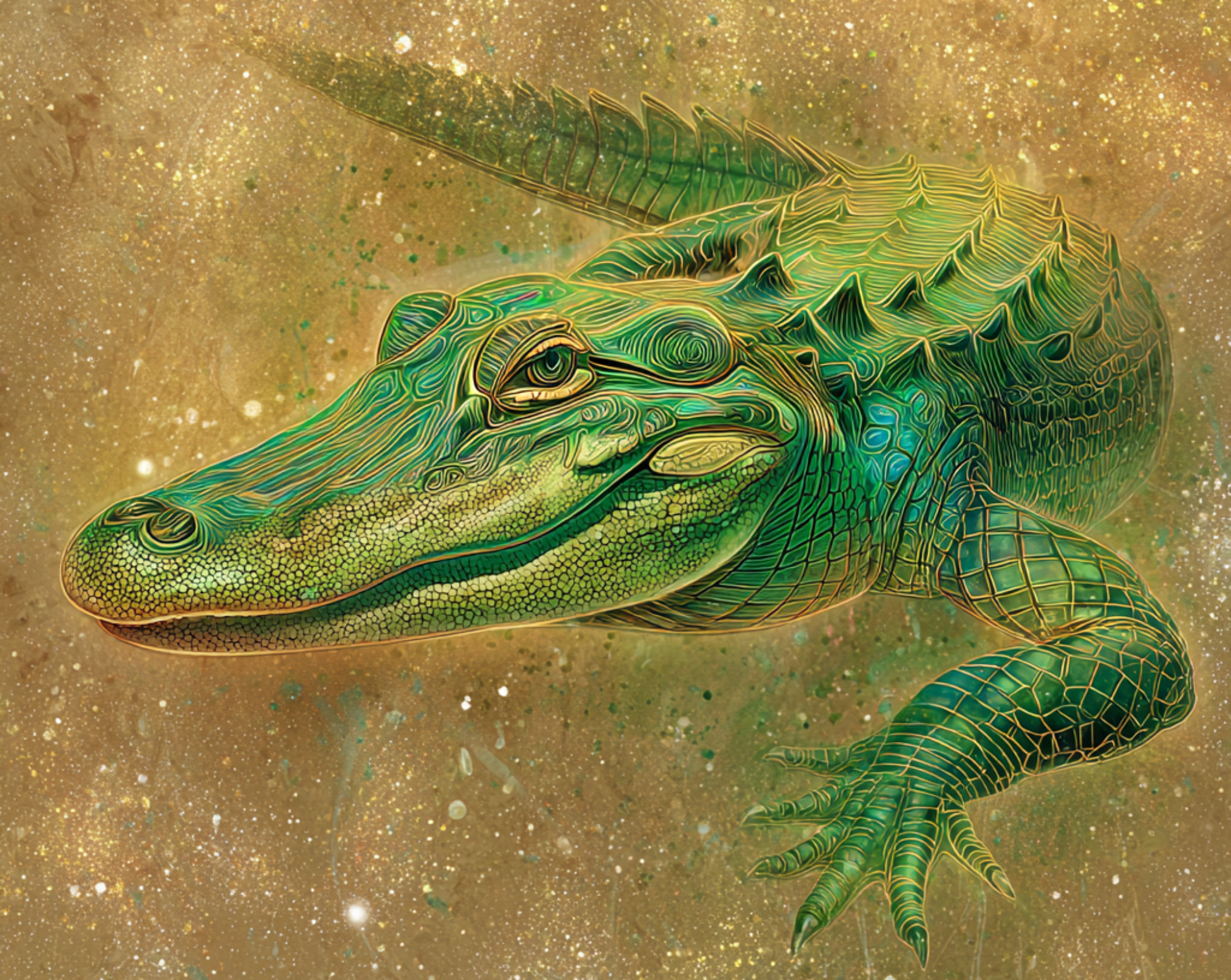
My first images came out looking like illustrations from an old children’s book—because I told the AI to make realistic illustration and that’s what it came up with. I worked through hundreds of animals and iterations of animal images and came up with the 30 or so animal images that I really liked.
This is a composite print that I made with some of my earlier AI animals:
Using the new animate feature at Midjourney, I started making dozens of 5- or 9-second animations of my animals walking, swimming, hopping, and anything else requiring motion.
I was thinking that many of these abstract or animal images and animations would work great as design elements or content in e-books as interactive PDFs or EPUB e-books
thinking they would work as great design elements or content for e-books. I think the e-books of the future will be full of AI images and animations, but we’re not quite there yet with the capacity of most e-book readers.
Some authors are already using AI to generator images of the characters and scenes in their fiction and non-fiction books. These images can be used for the book’s cover, or just as an inspiration and aide to the writer’s visualization of the book and its characters.
I think it’s just a matter of time before an author will be able to hire freelancers and others to animate scenes from their books to include with their e-book editions for much less money than it would take to do today.
I find that AI often comes up with images and ideas that surpass anything I could think of or do on my own. This image of an illumated horse got my attention and changed the way I was thinking about the AI animals I was working on.
As I started working on more animals that were getting more artistic and reflecting my own personal style and preferences, I began to think of ways that I might sell and market these images. I thought of trying to make contacts to license the images and trying to sell prints online. I already had an etsy.com store where I was happy to have sold 5 colorful prints of Los Angeles photos that I made ten years ago.
As it happened, I had registered to take a class on using AI at the West Hollywood Chamber of Commerce, close to where I live. The instructor was great and gave me a lot more information on how to use ChatGPT and the ways in which it could help me.
One of the main points of the class was what the instructor called “iterations” and what I’ve always thought of as versions. As a book designer, I’ll go through a dozen different design options before settling on the right samples to present to an author or publisher. It’s the same with AI. Sometimes you get lucky and your first option is fantastic, but it often takes any number of iterations and altering of prompts to get the right image.
Since I was so far in with using AI, I thought I should ask ChatGPT for a plan of how to sell art prints of my AI animals. The answer was very helpful and gave me a fairly detailed roadmap of how and where to sell my prints.
One of the questions I asked ChatGPT was if there was a market for AI images. It answered that there was a demand for AI-generated images and many ways to generate income from the sale and licensing of images. I also asked if I were permitted to sell AI images I created on Midjourney and again the answer was yes.
While I was working on that, I began ordering some sample prints from bayphoto.com to see how the images would look in real life. I made a bunch of different size high resolution prints of my favorite animal images. The prints far surpassed my expectations and looked beautiful with ¼” layer of polished acrylic set over the print instead of a frame. I’m also experimenting with selling framed and unframed limited-edition prints.
I’m not sure where this AI image generation journey is going next, but it’s going great for me so far.
Andrea Reider

